


Design Agency for Startups
We're a startup branding agency for Series A and Series B founders who need brand, identity and a Webflow site shipped before the next raise, the next launch or the next hiring sprint. Four-to-six week timelines because copy, design and dev run in parallel, not in sequence.






Why startup founders struggle with branding decisions
The buyer here is the founder. Not the head of marketing — the founder herself, usually a technical or domain-expert co-founder, sometimes with a junior marketing hire one quarter in. She has three things she's optimising for at once: speed (the next raise is closing, the next hire is being courted, the next launch is in eight weeks), credibility (the brand has to look like the company they want to be, not the company they are today) and price predictability (the budget has to survive a board conversation).
Most branding agencies don't fit. The big strategic brand houses sell six-month engagements at six-figure budgets, and they're optimising for a brand book the founder doesn't have time to read. The cheap end of the market gives you a Fiverr logo and a Cargo template. The middle is full of generalist agencies who don't understand what a Series A pitch deck looks like, what a SOC 2 procurement reviewer is going to ask, or why "AI-native data infrastructure for hardware-led R&D" cannot land in two readings.
The specific pattern we see with founders: they've outgrown the DIY brand. The Figma-shipped logo, the Notion-doc positioning, the Webflow template that the second engineer threw together on a Sunday. It worked at seed. It's now actively losing them deals. Enterprise prospects ask for a security audit and the site looks like a side project. The next investor pitches the founder against a competitor who looks two stages ahead, and the brand is the visible delta.
The other pattern: founders who've raised a Series A or B and are now hiring a head of marketing. The head of marketing's first hundred days are constrained by the brand they inherit. If the brand isn't solid, they spend their first quarter rebuilding instead of running pipeline.
The right time to invest is before the next public moment, not after. Three to four months ahead of a launch, a raise, a hiring sprint or a major partnership announcement.
What goes wrong on most startup brand programmes
Brand books nobody reads. A 120-page PDF with logo-usage rules and a brand-personality wheel. The founder doesn't have time, the next hire doesn't either, and the document gets used twice before it's forgotten. Brand systems for startups have to be operational from day one.
Positioning that flatters the founder. The agency interviews the founder, writes the positioning the founder wanted to hear, and ships. Six months later the company has pivoted slightly and the positioning doesn't fit. Real positioning comes out of pressure-testing, not flattery.
Sites that don't survive the next stage. A pretty Webflow site that breaks the moment the company adds a second product, a vertical solution page, a partner programme, an enterprise tier. The CMS architecture has to anticipate the next 18 months, not just the next launch.
Identity systems that age badly. Whatever was on the design Twitter timeline that quarter. Six months later it looks like the same identity twelve other startups in the same space launched with. Founders are paying for differentiation. Trend-driven design defeats the brief.
How Everything Design approaches startup engagements
We start with a founder interview. Not a kickoff workshop — a 90-minute call where the founder talks through the company at investor-pitch depth. We're listening for what the company actually is, what the founder actually believes, what's strategic versus tactical, and where the language is still being figured out in real time. The output of that call usually does more than half the positioning work.
We run copy, design and dev in parallel from week one. Most agencies run them in sequence — positioning first, then identity, then site — and that's why the timelines stretch to six months. We sequence inside the engagement: positioning is locked by end of week two, identity ships in parallel from week two to four, Webflow build starts week three. By week five we're in QA. By week six we ship.
This only works because we run small, senior teams. A strategist, a designer, a developer, a project lead. Four people who know each other's work and don't need a four-way handoff. The founder works with the strategist and the designer directly. There is no account manager between them. That's not a price decision; it's a quality decision.
We build on Webflow. The CMS structure anticipates the next 18 months — second product, vertical solution pages, partner page, careers, a real insights hub when the head of marketing arrives. The site is built to be extended, not rebuilt.
One deliberate choice: we resist over-designing. Startup founders are often shown work that looks impressive in a portfolio and impossible to operate. We design to what the company can sustain after we leave — what the next marketer can update, what the next designer can extend, what an enterprise procurement reviewer can verify is legitimate. The brand is built to be operated, not to win design awards.
Named clients and case study highlights
Armory — Series A defence-tech, only Indian company building counter-drone systems entirely in India, MoD tender already in hand. We built brand and Webflow for a company that had to communicate sovereignty, capability and credibility without slipping into commodity-defence aesthetics or startup gloss. The site had to pass an armed-forces tender review and an institutional investor's diligence visit in the same week.
Turno — EV battery intelligence for commercial fleets. The brief: positioning that worked across battery-as-a-service buyers, fleet operators, OEM partners and Series B investors without diluting. We built the verbal architecture and a Webflow site with 3D product renders that worked on the product page and the investor deck. The brand has carried them through subsequent rounds without a redo.
Sevenloop — precision manufacturing for hardware startups. We worked through how a contract manufacturer presents itself to founders who are paying real money for engineering precision and need to verify the firm is the real thing in two clicks. The site had to operate as both a marketing site and a credentialing document.
Progcap — Series C fintech, backed by Sequoia, Tiger and Google. We rebuilt the brand and Webflow site as the company moved from MSME lending into a broader supply-chain finance position. Buyer mix on the site: SME borrowers, enterprise anchor partners, banking partners and LP-facing investor narrative. Four readers, one site.
Other Series A-B engagements: Tredence, 5x, Bizongo (earlier stage), Cloudphysician (healthcare AI), LightMetrics (edge-AI video telematics), Transitry (climate-tech MRV), Kandou AI, Fortuna Cysec, Lumora Security, Ximkart, Ayr Energy.
Best for
Best for Series A and Series B founders 3-6 months out from a launch, raise or hiring sprint. The brand and site need to ship before the public moment, and they need to hold up under investor and enterprise-buyer scrutiny.
Best for technical-founder-led companies. Hardware, deeptech, AI infrastructure, dev-tools, B2B fintech. Founders who can describe their product but need a strategist to translate it for the rest of the buying committee.
Best for companies hiring their first head of marketing in the next quarter. Get the brand in shape before the marketing hire so their first hundred days run pipeline, not rebuild work.
We are not the best fit for pre-seed founders looking for a five-thousand-dollar logo, or for late-stage companies with in-house brand teams who need a single niche specialist. We're built for the Series A-B window specifically.
What's included
A typical four-to-six-week startup engagement covers:
- Founder interview and positioning workshop
- Brand strategy (positioning, audience mapping, narrative)
- Verbal identity (tone of voice, vocabulary, key messaging across stakeholder types)
- Visual identity (logo system, type, colour, photography, iconography, motion principles)
- Operational brand guidelines (single-document, working format)
- Webflow site (homepage, product or solution pages, about, careers, insights, contact)
- CMS structure built to extend (vertical solution pages, partner pages, insights hub)
- Pitch-deck template and investor-narrative one-pager
- Sales-enablement starter kit (one-pager, demo-deck cover system, email signature, LinkedIn cover system)
- Analytics instrumentation
- Handover and CMS training
Optional add-ons: product UI alignment, motion direction for product marketing, monthly retainer for ongoing brand and site evolution post-launch.
Engagement model
A full startup brand-and-website engagement runs four to six weeks at the standard scope. Larger scopes (multi-product, multi-vertical sites, multi-language) run six to eight weeks. We are explicit about scope on the first call — what fits in six weeks and what doesn't.
We run two-week sprints with a single working session per week with the founder, plus async working time in between. We do not require board reviews, all-hands voting or stakeholder workshops. We run the engagement directly with the founder and one other person (usually a co-founder or a marketing hire) and protect the working sessions.
We also offer a monthly retainer for ongoing brand and site evolution after launch — typically for founders who want a strategist and designer on call as the company adds products, verticals or markets.
If you're inside the next six months of a Series A or B moment, get in touch. We'll set up a 30-minute diagnostic call to see if we're the right partner.
When should a startup invest in branding, and what does a 4-6 week engagement actually deliver?
Founders don't have time for a six-month brand engagement and they don't need one. What they need is a strategist who can interview them at the depth of an investor pitch, a design system that holds up at Series C, and a site that ships before the term sheet expires. That's what we built the practice around.
Startup Design Projects
Expent
Brand and website design for Expent, a vendor lifecycle management platform from sourcing to renewal
Tunnel
Brand and website design for Tunnel, a payment automation platform built for equipment manufacturers
Ximkart
Brand and website design for Ximkart, a cross-border trade platform simplifying raw material imports

Swiffy Labs
Brand and website design for Swiffy Labs, a modular fintech lending infrastructure platform

i3systems
Brand and website design for i3systems, an AI-powered robotic process automation platform for insurance companies
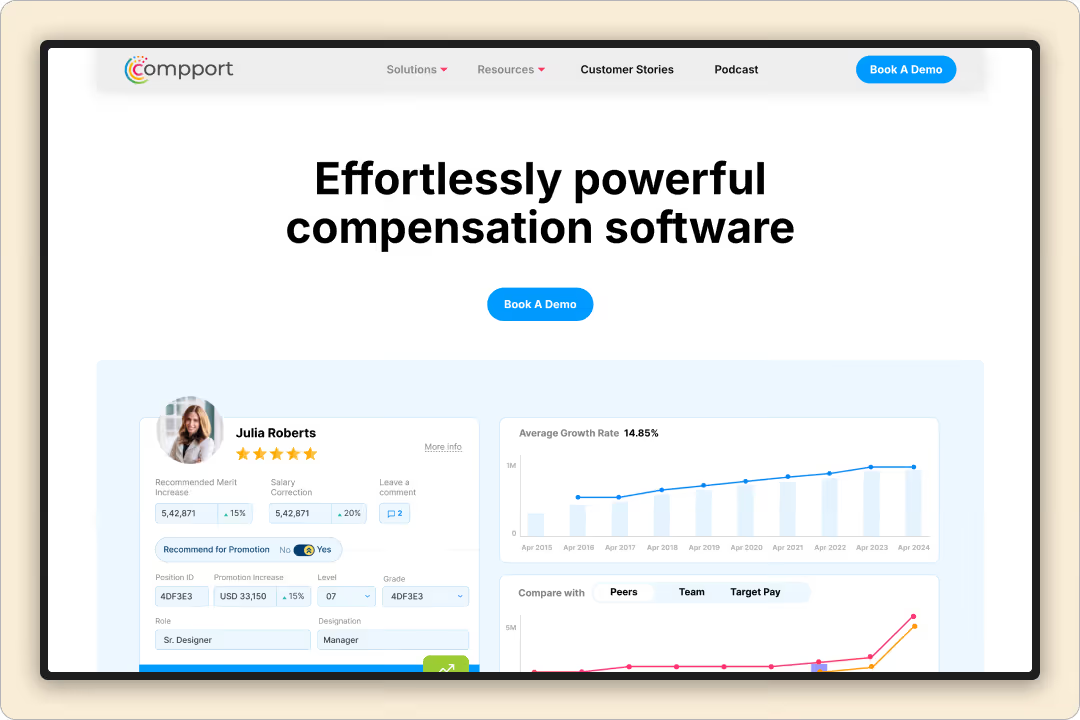
Compport
Brand and website design for Compport, an AI-powered compensation management platform for equitable and transparent pay decisions

Nimble Edge
Brand and website design for NimbleEdge, an on-device machine learning platform for real-time mobile personalization
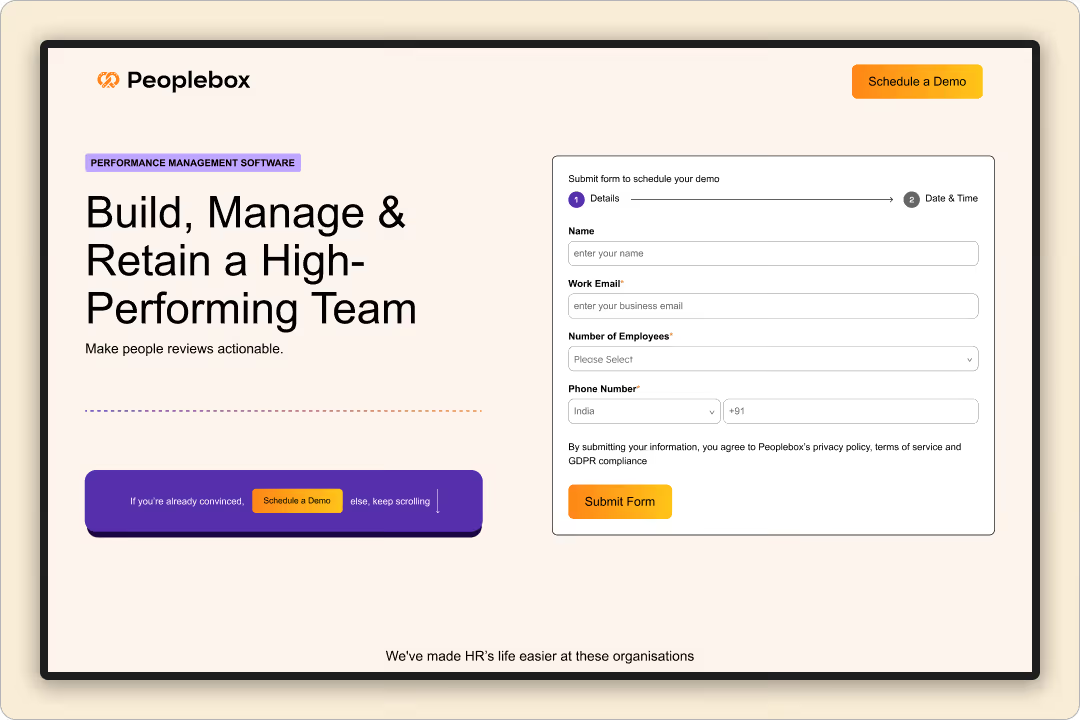
Peoplebox
Brand and website design for Peoplebox, a performance management platform for employee engagement and OKRs
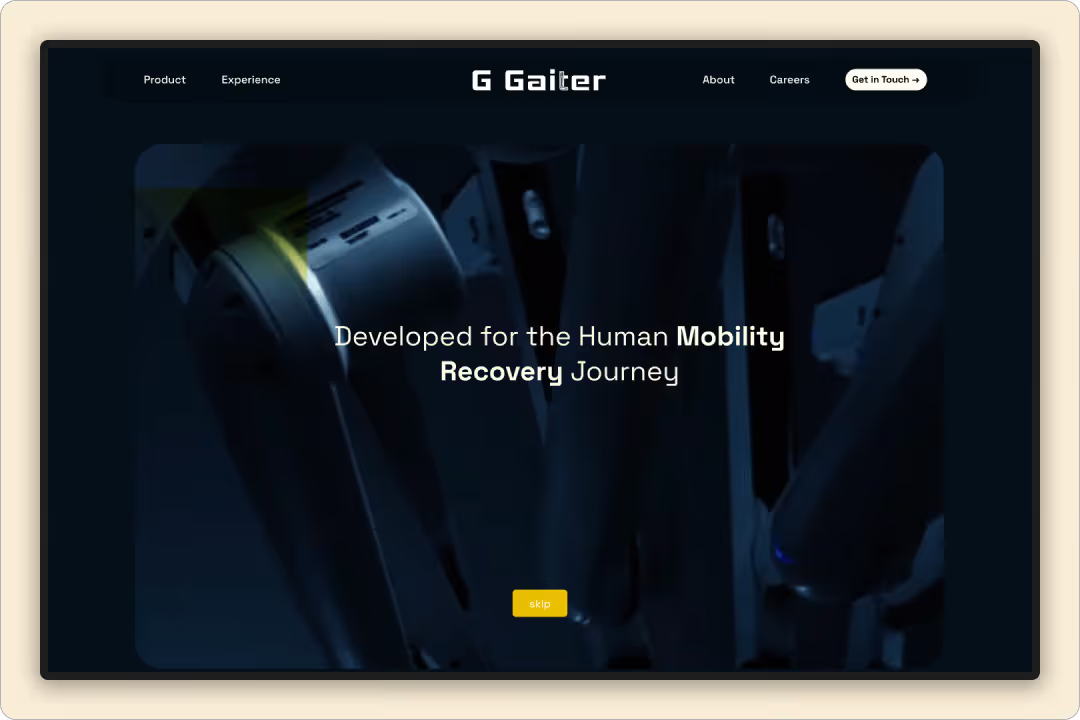
FAQs
Startups
Design Experts

Akhilesh J
Lead Designer

Athira Krishnan
Lead Designer | Content Strategist

Jiyash A K
Sr. Webflow Developer

Mejo Kuriachan
CEO | Partner | Brand Strategist

Sijeesh VB
Lead Strategist