Website Copywriting Agency
Great web design without great copy is like a beautiful storefront with no signage. Website copywriting for B2B is about turning complex value propositions into clear, compelling language that guides visitors toward action — whether that's booking a demo, downloading a resource, or reaching out.
What is website copywriting?
Website copywriting is the practice of writing the words on a company's website — the headlines, page narratives, and calls to action — so they communicate positioning clearly and move a specific buyer toward a decision. For B2B companies it's strategic work, not wordsmithing: it turns a complex, technical product into language a non-technical decision-maker can understand and act on.
Strong website copywriting starts from positioning and messaging — what you say, and to whom — before a single line is written. The copy is the site's argument; the design presents it.
When do you need a website copywriting agency?
You need website copywriting help when your site's words aren't doing their job — when visitors can't tell what you do, why it matters, or what to do next. The common triggers:
- Buyers don't understand your product from the site without a sales call.
- The copy lists features but never makes the case for the product.
- Messaging is inconsistent from page to page.
- You've repositioned and the copy still tells the old story.
- You're redesigning the site and need the words to lead, not follow.
- The writing sounds generic — it could belong to any company in your category.
The underlying failure is usually a site with no clear story for the buyer — features listed, but no argument made.
How to choose a website copywriting agency
Choose a website copywriting agency on strategy, scope, and B2B fluency — not on tone or turns of phrase. Six things to evaluate:
- Strategy before words. Positioning and messaging should come first. Ask how the agency would diagnose your message before it writes anything.
- One team, full scope. Copy developed alongside design and build — not bolted on afterward — produces a site that holds together.
- B2B and category experience. Look for writers who can handle technical products and B2B buyers, not consumer-style copy.
- Comparable proof. Ask for site copy written for companies at your stage and buyer type, and for messaging audits — like our breakdown of GoConsensus's website messaging — that show how the agency thinks about a buyer's story.
- Process and communication. Look for a structured messaging process, clear inputs from your side, and regular updates.
- Words before design. The strongest sites are written before they're designed, so the copy shapes the layout instead of filling it.
We write the words before designing the visuals — an in-house content strategy team handles messaging and copy, with senior product marketing depth available through partners when a project calls for it. See our take on what strong website copy does and the hero-message decisions that carry the most weight. Copywriting is usually scoped alongside a B2B web design project.
Consider if your website copy is making things clear or making things confusing by asking these 6 Qs:
1. Will a new visitor quickly understand what we do and who we're for?
2. Will they understand this right away? (like in 10 seconds)
3. Do we have clear and unique value props / benefits to the buyer outlined on our homepage?
4. Do we have clear and unique features of our product outlined on our homepage?
5. Do we help the visitor figure out what to do next once they read our Homepage?
6. Is our messaging consistent across the website, social channels, crunchbase, G2, sales team calls, etc.?
Writing website copy is not for everyone, but asking these important questions can help you find your weak spots, be more intentional with the words you're using and most important just be clear.
What's good website copy? It's when your ICP (the intended recipient) will find it clear, relevant, differentiated and compelling. Optimize and iterate until you're there. Good website copy persuade, convince and drive action.
How to fix your Website Hero Copy?
- Clearly Define Your ICP: Make it abundantly clear who your product is for and what it does.
- Avoid Gimmicky Effects: Ditch distracting typewriter effects, rotating banners, or carousels that obscure the key message.
- Keep it Simple and Direct: Don’t make your visitors dig for answers. The more straightforward your message, the faster you can engage potential customers.
If your hero copy can’t do these simple things, there might be deeper issues with your website—and even with your product positioning.
Why is website copy so critical for B2B conversion?
Because your website copy does the selling when your sales team isn't in the room. B2B buyers self-educate before they ever talk to sales, and your website copy is what builds or breaks their confidence. Strong copy speaks to the buyer's pain, positions your solution clearly, and makes the next step feel natural. Everything Design writes website copy that's strategically structured, SEO-informed, and designed to convert — not just inform.

Website Copywriting Projects

Ximkart
Brand and website design for Ximkart, a cross-border trade platform simplifying raw material imports
Expent
Brand and website design for Expent, a vendor lifecycle management platform from sourcing to renewal
Fortuna Identity
Brand strategy and identity design for Fortuna Identity, a cybersecurity firm specializing in identity and access management
.avif)
Fortuna Cysec
Brand strategy and website design for Fortuna Cysec, an AI-driven managed security services provider for threat detection and compliance
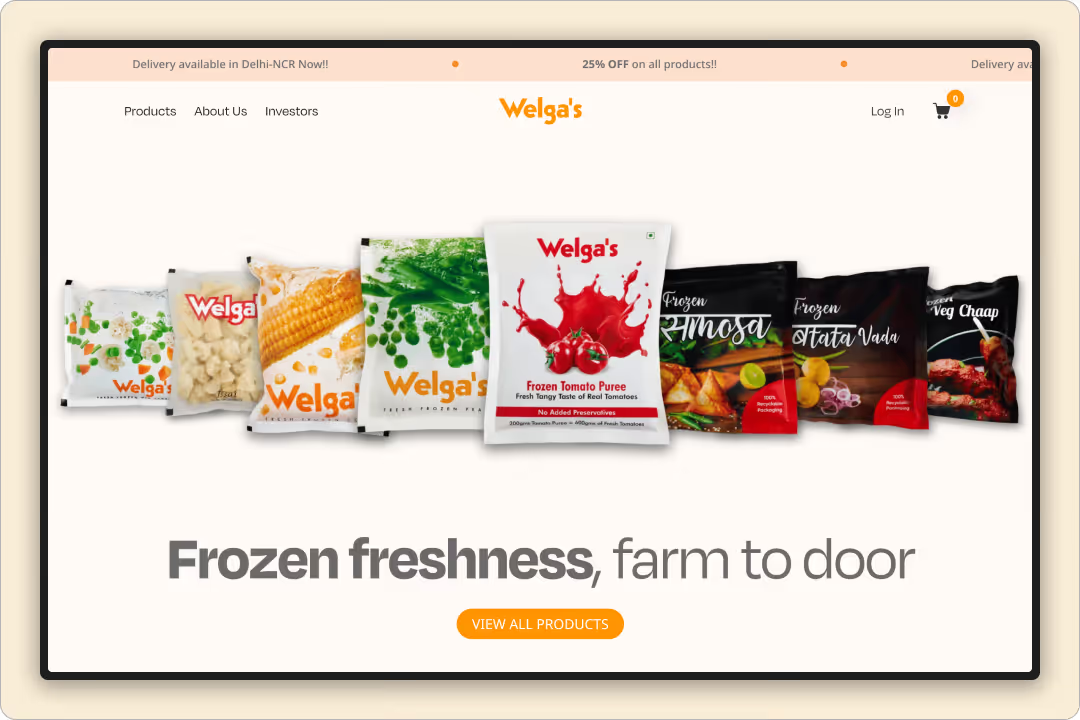
Welga's (Shopify)
Brand identity and Shopify e-commerce website design for Welga's, a premium artisanal food brand

Tunnel
Brand and website design for Tunnel, a payment automation platform built for equipment manufacturers

Nimble Edge
Brand and website design for NimbleEdge, an on-device machine learning platform for real-time mobile personalization

Lakshmigraha
Rebrand and website design for Lakshmigraha, a trusted manufacturing and warehousing name since 1984
FAQs
Website copywriting is the voice of your brand and the primary tool for converting visitors into leads and customers. Effective B2B web copy speaks directly to prospect pain points, establishes credibility, simplifies complex solutions, and guide users toward conversion actions. Poor copywriting wastes traffic; strategic copywriting turns interest into inquiries regardless of how brilliant your design or strong your traffic acquisition is.
Addressing Pain Points and Building Relevance
B2B buyers research extensively before engaging sales. Your website copy must immediately address their specific challenges and position your solution as the answer. Rather than generic claims like "We're a leader in our industry," strategic copy articulates precise problems your solution solves: "Reduce sales cycle length by 30% through streamlined proposal processes." This specificity resonates with decision-makers facing those exact challenges. When copy directly reflects prospect priorities, engagement rates increase dramatically.
Simplifying Complex Solutions
Enterprise software, consulting services, and B2B platforms are inherently complex. Website copy breaks complexity into understandable narratives, explaining what you do without jargon or marketing fluff. This clarity is essential for reaching diverse stakeholders—technical teams, procurement, C-suite executives—each with different vocabulary and priorities. Well-written copy translates features into business benefits that resonate across organizational hierarchies.
Building Trust Through Strategic Messaging
B2B buyers need assurance that you understand their world and can deliver results. Copy that demonstrates industry expertise, references specific challenges only insiders recognize, and includes concrete proof points (case studies, metrics, client logos) builds credibility immediately. Conversely, generic marketing language undermines trust. Strategic copy positions your company as a knowledgeable partner who understands enterprise complexity.
Guiding Action and Removing Friction
Each page serves a purpose: awareness pages educate, consideration pages compare, and decision pages drive conversion. Copy at each stage should guide the next logical step. CTAs must be clear and action-oriented—not "Submit" but "Schedule your custom demo." Strategic copy removes questions that could otherwise prevent conversion: pricing clarity, implementation timelines, support availability. When prospects understand next steps and feel confident, they convert.
Website copywriting is as critical as design. Our web design process includes strategic copywriting that converts. Learn how brand strategy informs copy across all touchpoints and let's discuss your messaging strategy.
Website copywriting and content writing serve distinct purposes and require different approaches. Website copy is persuasive, conversion-focused, and structured to guide specific actions. Content writing educates, builds authority, and establishes relationships over time. B2B companies need both: web copy moves prospects toward conversion, while content builds trust and positions you as industry expertise. Understanding these differences ensures each type of writing achieves its purpose and together they create cohesive marketing strategies.
Purpose and Conversion Focus
Website copy has a singular, immediate goal: move visitors toward conversion actions—signing up for a demo, requesting a proposal, starting a trial. Every element serves this purpose. Headlines address pain points, subheadings articulate benefits, body copy removes objections, and CTAs guide next steps. The structure is deliberate and tight; every word justifies its presence. Content writing has different goals: educate, establish expertise, build relationships, and improve search visibility. Individual blog posts or whitepapers aren't designed to convert directly; instead, they earn trust and demonstrate knowledge that eventually influences buying decisions.
Audience and Buyer Journey Stage
Web copy primarily targets prospects actively considering your solution—they've identified a problem and are evaluating vendors. Copy speaks directly to their evaluation criteria. Content writing casts a wider net, reaching prospects earlier in their buying journey before they've even identified specific vendors. Early-stage prospects search for information on challenges, industry trends, and potential solutions—content addresses these exploratory needs. Mid-stage and late-stage prospects return to your website copy to evaluate your specific offer.
Structure and Messaging Strategy
Web copy uses proven persuasion structures: headline that captures attention, subheading that explains relevance, short paragraphs with frequent subheadings, bullet points highlighting benefits, testimonials and proof points building credibility, and clear CTAs driving action. Content writing follows journalistic or educational structures—longer form, more contextual, allowing ideas to develop fully. Web copy is scannable; prospects skim pages looking for relevant information. Content is meant to be read thoroughly, as readers are genuinely interested in the subject matter.
Long-Term Value and Authority Building
Content writing creates long-term assets that continue generating traffic and establishing authority months or years after publication. A comprehensive blog post on industry trends ranks in search results indefinitely, attracting prospects and building brand credibility. Web copy, while important, has limited lifespan—pages are updated as positioning evolves. Strategic B2B companies develop robust content libraries that support web copy: blog posts answer common questions your web copy references, whitepapers provide detailed information prospects request, case studies provide proof your web copy promises.
Integrated copywriting and content strategies drive growth. Our web design process includes persuasive copywriting structured for conversion. Our content explores B2B branding and design strategies in depth. Discuss your content and copy strategy with our team.
Website copy determines whether visitors become leads. Even beautiful design with poor messaging fails to convert because copy addresses visitor questions, builds trust, and guides decisions. Strategic copy communicates value clearly, addresses objections preemptively, and creates psychological urgency encouraging action. Copy quality often impacts conversion rates more than design aesthetics alone.
Communicating Value and Clear Benefits
Visitors land on your website asking "How does this help me?" Copy must answer this question immediately using benefit-focused language addressing visitor needs. Avoid feature descriptions; translate features into outcomes. Instead of "cloud-based platform," explain "Access your data from anywhere, enabling distributed team collaboration." Clear value communication eliminates confusion and accelerates decision-making. Use specific language; vague promises fail to convince experienced buyers evaluating multiple solutions.
Building Trust and Addressing Objections
Effective copy anticipates buyer concerns and addresses them preemptively. Acknowledge common objections—implementation complexity, security concerns, integration challenges—and explain solutions proactively. Include third-party validation: client testimonials, case studies, certifications, and media mentions. Explain company background and expertise establishing credibility. Transparent communication about limitations builds trust more effectively than overselling capabilities.
Creating Psychological Urgency and Action
Strategic copy uses persuasive language encouraging immediate action: limited-time offers, scarcity signals (only X spots available), or milestone language ("join 5000+ companies"). Clear calls-to-action specify expected outcomes: "Schedule a 20-minute consultation" works better than generic "Contact us." Copy maintaining momentum through sequential page sections guides visitors toward conversion actions rather than allowing abandonment.
Conversion-Optimized Copy Best Practices
Use conversational tone matching your audience; B2B decision-makers prefer professional clarity over casual language. Keep sentences concise and paragraphs short for web readability. Use bullet points and subheadings breaking complex information into digestible sections. A/B test copy variations on high-traffic pages to identify highest-converting messaging. Work with brand strategy partners ensuring messaging consistency across all customer touchpoints.
The head of sales is a goldmine of customer insight – they know firsthand what messaging resonates with prospects and what objections come up. Involving them can make website copy far more persuasive. Marketers should ask questions like: “What questions do prospects ask most often during sales calls or demos?” If the sales head says, for example, “They always ask how we compare to competitor X or if we integrate with Y,” that’s a cue to address those on the website – maybe on the homepage or FAQ – so prospects see the answers upfront (e.g., a comparison table or a line like “Seamlessly integrates with Y software” right in the copy).
Another question: “What part of our pitch or value proposition seems to excite prospects the most?” Sales might say, “When we show the ROI calculation or mention we cut manual work in half, their eyes light up.” Ensure that benefit is shouted on the site, not buried. For instance, turn it into a prominent headline or subheadline (“Reduce manual work by 50% with our solution”).
Also ask: “What misconceptions or concerns do prospects have about our product/ service?” Sales might reveal something like, “Many think implementation is hard until we clarify it’s done in 2 weeks.” That’s a sign to proactively tweak copy to preempt that – e.g., add “Quick 2-week implementation” in the features/benefits list.
“What characteristics define our best customers and why did they choose us?” The sales head could share mini-stories: “Our best customers chose us because we’re more flexible and customer-centric than big competitors.” This can guide tone (emphasize customer-centricity in copy) and content (maybe include a testimonial speaking to flexibility).
By asking these pointed questions, marketers get to infuse real-world persuasion points into the website. Essentially, it aligns the website’s narrative with what actually works in the sales process. The outcome is copy that not only sounds nice, but actually addresses the key points that move prospects to buy – because it was informed by direct sales experience.
So, partnering with the sales head makes the site a better “digital salesperson”: anticipating and answering prospects’ top-of-mind issues, mirroring the language that sales knows works, and highlighting the differentiators that sales knows often seal the deal.
Website Copywriting
Experts

Swathi Mohan
Content Strategist

Mejo Kuriachan
CEO | Partner | Brand Strategist

Athira Krishnan
Lead Designer | Content Strategist